

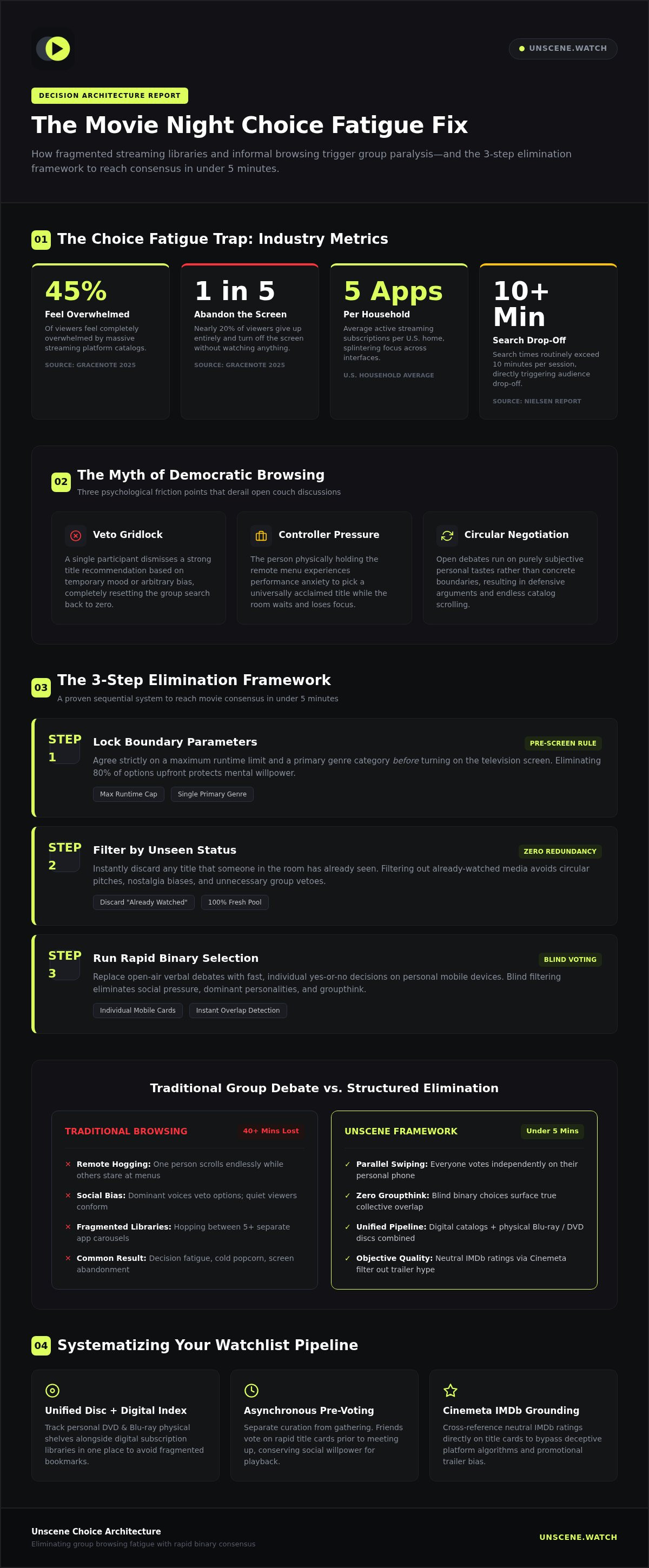
According to Gracenote's 2025 State of Play report, 45% of viewers feel completely overwhelmed by streaming catalogs, and nearly one in five abandons the screen entirely. You sit down with fresh popcorn, start an app, and quickly lose forty minutes to trailer previews, vetoed suggestions, and mismatched tastes. Finding an actionable movie night choice fatigue fix shouldn't feel like extra work, but open-ended catalog scrolling inevitably turns a relaxing evening into group decision paralysis.
You shouldn't have to debate options until the room loses interest. In this guide, you'll discover why bloated platform libraries trigger choice fatigue and learn simple elimination strategies to pick an unseen film within five minutes. Here is your streamlined blueprint to eliminate browsing friction, avoid social pressure, and finally get back to watching.
Key Takeaways
- Understand why juggling multiple streaming platforms increases cognitive friction instead of making title discovery easier.
- Apply a three-step elimination framework as a proven movie night choice fatigue fix to pick a title in under five minutes.
- Filter out already-watched titles upfront to avoid circular debates and repetitive vetoes.
- Centralize physical discs and digital options into an asynchronous voting flow before gathering on the couch.
The Choice Fatigue Trap: Why More Streaming Options Ruin Movie Night
Movie night choice fatigue is the cognitive exhaustion that hits when you navigate thousands of competing titles across fragmented subscription services. Expanding your catalog rarely makes selection simpler. U.S. households subscribe to an average of five streaming apps, yet having access to millions of titles merely splinters focus. Platform carousels are built to hold attention on the interface, keeping you browsing instead of watching. This dynamic triggers the overchoice phenomenon, where surplus options deplete mental willpower and stall collective action. Developing a real movie night choice fatigue fix begins with recognizing that endless variety works against quick consensus.
The Myth of Democratic Browsing and Group Consensus
Passing the remote across the room rarely yields an easy consensus. Instead, informal group browsing introduces subtle social friction that drags out the selection process:
- Veto gridlock: A single person dismisses a suggestion based on temporary mood, resetting the entire search.
- Controller pressure: The person operating the menu feels performance anxiety to select something universally acclaimed.
- Circular negotiation: Open debates run on subjective taste rather than concrete, shared filters.
Verbal debates don't solve catalog sprawl. They magnify differences and trigger defensiveness. Implementing a structured movie night choice fatigue fix eliminates the guesswork, moving your group from circular discussions directly to playback.
The 3-Step Elimination Framework: A Proven Movie Night Choice Fatigue Fix
Replacing open-ended browsing with a systematic process cuts selection time down to under five minutes. A practical movie night choice fatigue fix relies on three sequential constraints executed in order:
- Lock boundary parameters: Agree on a maximum runtime and a primary genre before turning on the television screen.
- Filter by unseen status: Discard any title someone in the room has already seen to avoid repetitive pitches.
- Run rapid binary selection: Replace open debates with fast, individual yes-or-no decisions.
Findings from Nielsen's State of Play report indicate that search times routinely pass ten minutes per session, causing viewers to abandon viewing altogether. Setting structured parameters stops that spiral early.
Shifting from Group Debate to Blind Binary Filtering
Open discussions allow dominant personalities to hijack the room. Blind binary filtering restores balance. Rapid prompts like "Watched" or "Not Yet" force quick, instinctual choices instead of drawn-out negotiations. When everyone votes independently on their own phone, social pressure and groupthink disappear entirely.
Following proven guidelines for a movie night coordinator keeps this voting phase brisk. When you are ready to automate elimination, plan a movie night with rapid title cards to reveal collective matches without endless debate.
Systematizing Your Watchlist: Turning Chaos into Automatic Consensus
Scattered bookmarks across multiple streaming services create unnecessary drag. Centralizing digital catalogs alongside personal DVD and Blu-ray discs into one unified pipeline keeps all your options visible in one spot. According to the American Psychological Association's research on decision fatigue, segmenting complex evaluations into structured, sequential steps protects mental energy. Using an asynchronous movie night planning tool lets everyone review options before meeting, while neutral IMDb ratings cut through promotional trailers to highlight genuinely solid picks.
Streamlining Watch Sessions with Dedicated Planning Tools
Deploying a specialized movie night decision maker surfaces common ground without uncomfortable verbal debates. Adopting a modern movie night planner app provides a reliable movie night choice fatigue fix by separating title curation from the actual gathering.
Unscene accelerates this workflow directly from your mobile browser as an installable home-screen web app. Friends join a shared room to review rapid-fire title cards, filtering by "Watched" or "Not Yet" independently. The platform cross-references IMDb ratings via Cinemeta and tracks local DVD or Blu-ray shelves alongside digital libraries. Within minutes, the system highlights unseen overlap across the group, delivering an actionable movie night choice fatigue fix that trades indecision for instant playback.
Start Watching in Five Minutes Instead of Browsing
Endless menu scrolling doesn't have to define your evenings. Setting tight constraints beforehand, eliminating previously watched titles, and replacing spoken arguments with blind voting will transform your entertainment routine. A dependable movie night choice fatigue fix replaces awkward compromises with swift, objective consensus so everyone stays invested.
Take the friction out of your living room. End choice fatigue tonight with Unscene. The rapid-fire card system surfaces shared unseen movies instantly, helping your group agree without social pressure. Best of all, there's no software download required because it's installable directly to your home screen. Pick your next film effortlessly and get back to enjoying movie night together.
Frequently Asked Questions
What causes choice fatigue during group movie nights?
Group choice fatigue stems from cognitive overload caused by fragmented libraries and conflicting personal tastes. Scrolling through sprawling digital catalogs forces your brain to evaluate hundreds of distinct posters, genres, and trailers while managing social expectations. The pressure to select a movie that pleases everyone rapidly drains willpower, turning a casual evening into an exhausting mental chore.
How does an elimination framework resolve streaming decision paralysis?
An elimination framework acts as a practical movie night choice fatigue fix by replacing open-ended exploration with systematic boundary constraints. Instead of browsing endless rows, you lock runtime caps, isolate a genre, and discard previously seen titles upfront. Narrowing the selection field removes excess variables, allowing your group to evaluate a small pool of high-probability candidates in minutes.
Can a dedicated movie planner app stop friends from arguing over films?
Yes, dedicated planning tools remove interpersonal friction by shifting decisions from spoken debates to private voting. Unscene allows participants to swipe through rapid-fire title cards independently on their phones. The app compares individual answers, filters by IMDb ratings, and surfaces shared unseen matches automatically. Group members discover common ground objectively without subjective arguments or peer pressure.
Why does democratic browsing usually fail when picking a movie together?
Democratic browsing fails because passing the remote creates vocal gridlock rather than true consensus. Open discussions grant outsized power to immediate vetoes, allowing a single negative comment to reset the entire search. It also heaps social pressure onto whoever holds the remote. Adopting an automated movie night choice fatigue fix bypasses group hesitation and gets titles playing promptly.


